
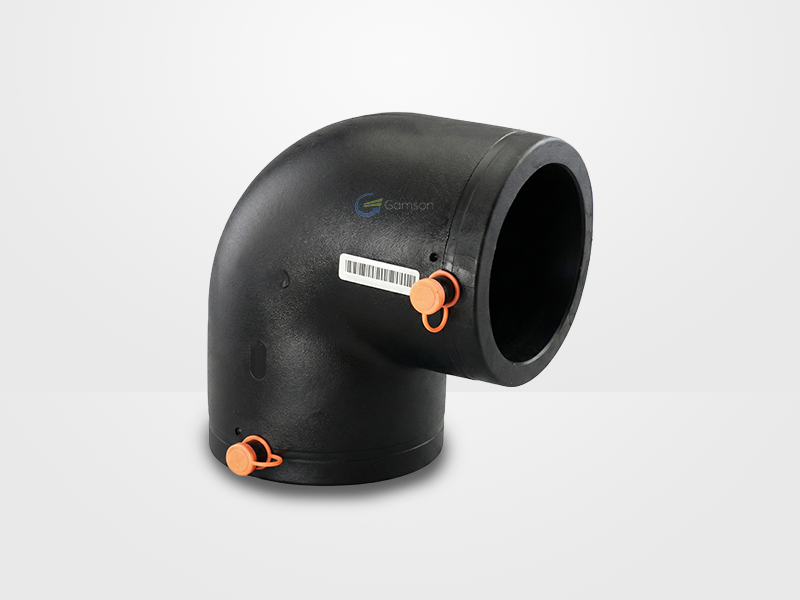
Click main image to zoom
Electrofusion Elbow
Gamson manufactures high-performance Electrofusion Elbows, specifically designed for creating 45-degree or 90-degree changes in direction in HDPE piping systems. These fittings utilize embedded resistive heating coils to create a high-strength, leak-proof molecular bond between the fitting and the pipe. Electrofusion elbows are the preferred choice for gas distribution and high-pressure water networks, especially in restricted spaces where traditional butt-fusion machinery cannot operate.
Key Features
- Integrated Heating Coils: Precision-placed resistive wires ensure consistent heat distribution across the fusion zones of both ports.
- Space Efficiency: The compact design allows for installation in narrow trenches or complex utility corridors where pipe movement is limited.
- Automated Fusion Parameters: Each elbow features a barcode that provides the electrofusion processor with the exact voltage, fusion time, and cooling time required.
- Visual Fusion Indicators: Integrated "pop-up" pins provide a physical confirmation that the correct expansion pressure was achieved during the heating cycle.
- High Pressure Integrity: Rated for high-performance applications, typically available in SDR 11 (PN 16) to ensure the fitting is as strong as the pipeline.
- Material Excellence: Made from PE100 virgin resin, offering maximum resistance to chemical corrosion and environmental stress cracking.
Technical Specifications
| Material Grade | PE 100 / PE 80 |
|---|---|
| Available Angles | 45° and 90° |
| Pressure Rating | PN 10, PN 16, PN 25 |
| Voltage | Standard 39.5V - 40V |
| Size Range | 20 mm to 630 mm OD |
| Terminal Pins | 4.0 mm or 4.7 mm universal pins |
| Standard Compliance | ISO 4427, EN 1555, EN 12201 |
Primary Applications
- Gas Main Construction: The industry standard for directional changes in natural gas and LPG distribution networks.
- Potable Water Systems: Used in high-pressure municipal water lines to navigate around underground obstacles or existing utilities.
- Industrial Process Piping: Routing chemical-resistant pipelines through factory layouts where space is at a premium.
- Sewer Force Mains: Changing direction in pressurized wastewater systems where a fully fused, leak-proof joint is mandatory.
- Trenchless Repairs: Often used in slip-lining or pipe bursting projects to reconnect service lines.
Installation Best Practices
- Pipe Preparation (Scraping): You must use a mechanical pipe scraper to remove the oxidized outer layer of the HDPE pipe. A hand-held scraper is only recommended for very small diameters.
- Cleaning: Wipe the scraped pipe and the internal surface of the elbow with 90% Isopropyl alcohol using a lint-free cloth.
- Alignment & Clamping: Use an alignment clamp to hold the pipe and elbow in a stress-free position. Any tension in the pipe during fusion will cause the molten plastic to leak from the joint.
- Insertion Depth: Mark the insertion depth on the pipe with a permanent marker to ensure it is fully seated against the internal stop of the elbow.
- The Fusion Cycle: Connect the electrofusion processor, scan the barcode, and start the cycle. Observe the fusion indicators.
- Cooling Time: Never remove the clamps or move the pipe until the cooling time stated on the barcode has finished. Moving it early will cause microscopic voids in the weld.